Community Action Planning Council of Jefferson County, Inc. is a private non-profit, multi-service agency serving the citizens of Jefferson County since 1966. We are one of 50 Community Action Agencies in New York State and one of over 1,000 nationwide. Community Action was born out of the Equal Opportunity Act of 1964, initiated by President John F. Kennedy and brought to fruition by President Lyndon B. Johnson. Community Action Agencies are founded on a common purpose: to support low-income households as they develop their abilities to be self-supporting and develop family and community relationships that will sustain self-reliance. Community Action recognizes that needs vary by community and agencies develop specialized services tailored to their home community.
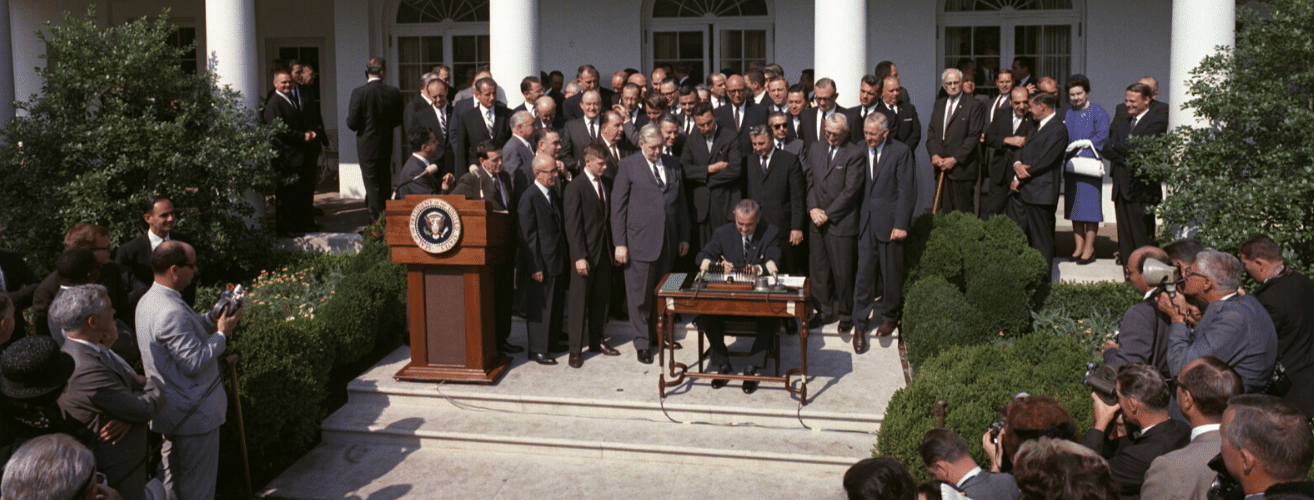
1964 – President Lyndon Baines Johnson signed the Economic Opportunity Act authorizing the funding of Community Action Agencies. As a result, 75 Community Action Agencies were created nationwide.
1965 – Community action of Jefferson County Inc. was created through action taken by the League of Women Voters and the Council of Social Agencies.
1966 – Community action of Jefferson County Inc. became incorporated and received a grant to operate a Head Start program.
1967 – 1000 Community Action Agencies nationwide. Mr. Ed Eastman was hired as our first Executive Director. A grant was received to support a center in Carthage and to develop a Foster Grandparent Program; a year-round Head Start program and 4 day care centers were created.
1970 – The Community Center on Alcoholism was developed through a grant to COMMUNITY ACTION from the Office of Economic Opportunity and joined Planned Parenthood as a delegate agency of COMMUNITY ACTION.
1972 – Community action received funding for the North Country Children’s Clinic as a delegate agency.
1974 – Community action continued programming in Food and Nutrition with a grant to serve four counties.
1975 – Received first Women Infant and Child (WIC) grant. Head Start now in the 7th year of operation, serving 45 children. Delegate agencies received individual incorporation and spun off to become independent community agencies.
1976 – Weatherization Assistance Program began.
1977 – The Retired Senior Volunteer Program had started its fourth year with community action. The first community garden was organized.
1979 – Head Start expanded to a third center in Theresa.
1980 – Community action expanded the umbrella to provide support services to Service Corps of Retired Executives (SCORE), Literacy Volunteers, Senior Action Council and the Clayton Paynter Center.
1981 – Community action received core funding through the NYS Community Services Block Grant instead of directly from the Federal Government. Tax Counseling Program began.
1982 – Community action organized a Fellow Companion program that was the forerunner in Jefferson County to the Big Brother/Big Sisters program. Community action became involved in major distribution of commodities.
1985 – Community action’s location at North Junior School was terminated due to the anticipated expansion of Ft. Drum; the agency moved to Trinity Church. The Food Pantry received a large Member Item to maintain services.
1987 – Community action began phase 1 of stabilizing and renovating the abandoned Cooper Street School.
1988 – The STOPLIFT Program was initiated. Judges would refer first time teen theft offenders to our Program designed to decrease recidivism. A short-lived Homeless Shelter was opened. The Homeless Intervention Program (HIP) began.
1989 – Summer Food Service Program began. The Child and Adult Food Program (Formerly the USDA Child Feeding Program) was added as a program of the agency.
1990 – Community Action moved to a new and permanent home on Cooper Street. The Day Care Center was opened. The Child Development Associates Certification is now taught at the in the Cooper Building.
1995 – Family Center was created.
1997 – Community action held first Family Development Credentialing course for agency staff and have since been providing the class for community members as well.
1998 – Community action contracted with Watertown City School District to establish Universal Pre-K program. Our first contract with Jefferson County Planning to be the Fair Housing Office for the county was born.
1999 – Purchased a 25,000 square foot warehouse on Morrison Street.
2002 – The Jefferson-Lewis Child Care Council merged with Community Action’s Child Care Resource and Referral (CCR&R) department and the Jefferson-Lewis Childcare Project was created. Received our first Even Start grant in partnership with the Watertown and Carthage School Districts.
2003 – Received the Community Solutions to Transportation (CST) grant through the Jefferson County Department of Social Services.
2005 – Received funding for two more new programs, Army Child Care in Your Neighborhood and Empower.
2007 – Universal Pre-K expanded with partnership with Indian River School District.
2009 – Community action received $1.5 million in additional funding through the American Reinvestment and Recovery Act.
2010 – Received an Agreement with Child Care Solutions to provide Infant and Toddler Care Training and Technical Assistance, expanding our Jefferson Lewis Child Care Project services.
2011 – Our ‘Ready to Work” program was funded by the Community Services Block Grant Discretionary funds. This program provides financial assistance for individuals that enroll in education focused on a career path to a sustainable wage job.
2012 – 2013 – The Family Center expanded their services to include some Community Action Angels Programs, including the backpack program, Back to School in Style, Coats for Kids, Seeds and Needs and more. They expanded hours to accommodate working families by lengthening daily access to services and being open one night a week.
2014 – 2015 – A national trainer for The Bridges Out of Poverty initiative was introduced to the community at a two day session in October 2014. A follow up Bridges community collaboration continued throughout the following years.
2016 – The first Getting Ahead in a Just Getting By World Workshop series was held by Community Action. Community partners were engaged in continuation of “Getting Ahead” classes and the co-facilitation of the workshops were begun.
2017 – The Care and Share Program was added to the Family Center’s services. This program is sponsored by National Grid and gives eligible applicants funds to assist with their electric and heating bills.
2018 – Community Action received funding through Governor Cuomo’s Empire State Poverty Reduction Initiative (ESPRI) via the City of Watertown. The grant provided funds to bring in a Bridges Out of Poverty national trainer for community awareness and to provide a train the trainer session for local individuals and organizations to become Facilitators of the “Getting Ahead” workshops. 10 workshops were provided through these funds. We also subcontracted with the Jefferson County Employment and Training Department to initiate the Employers Resource Network (ERN) through the ESPRI initiative.
2019 – Our illustrious Marketing Committee created our Community Action mascot “Cappy”. Cappy is a St. Bernard, known for being smart, even-tempered, great with kids, and loyal. Cappy visits classrooms, agency events, community events, libraries, other agencies and more. Small stuffed Cappy’s were also purchased for promotional use.
2020 – This year has been marked with the Covid-19 pandemic. The agency was closed to visitors in March but the staff remained employed and exceptionally busy with adaptations to programs. We started preparing and delivering meals for children out of school in March and we are continuing that service through the summer. The Food Pantry was exceedingly busy in the first few months of the pandemic. We are participating in Food Box distribution on Saturdays through the middle of August at sites throughout the county. Local businesses, organizations and individuals have donated funds for food, personal care items and PPE to the agency. We are receiving CARES funding for Head Start, the Jefferson Lewis Child Care Project and CSBG.
Over the years, community action has grown from a staff of 2 in 1966 to a staff of 180 full and part time employees; and from a first grant of $31,380 to a current budget of just under $8,000,000. In Fiscal Year 2019, we served 6,378 unduplicated individuals through a variety of Community Action programs.